World-class engineering, little or no tuition.
Germany is Europe’s largest economy and one of the most popular study destinations in the world. Most public universities charge no tuition fees, and after graduating you can stay for up to 18 months to find a job.
 Admission in ~2 monthsthrough our partner universitiesFree counsellingand student visa support
Study in Europe’s economic powerhouse.
German universities are known for engineering, science and research, and German employers value graduates who studied in the country.
Language: English and German.
You can study in English, and a little German goes a long way in daily life and at work.
From Berlin to Munich, a city for every student.
Germany has hundreds of universities spread across the country, from big international cities to historic university towns.
- Berlin
- Munich
- Hamburg
- Frankfurt
- Cologne
- Stuttgart
- Düsseldorf
- Aachen
- Heidelberg
- Karlsruhe
- Dresden
- Leipzig
- Bonn
The German student visa, step by step.
Students from India apply for a national (D) visa for study. Processing can take several weeks, so we help you apply as early as possible.
- APS certificateIndian students get their academic documents verified by the APS (Academic Evaluation Centre) in India.
- AdmissionGet your admission letter from a German university.
- Blocked accountShow your funds, usually through a blocked account (Sperrkonto), and arrange health insurance.
- Apply onlineSubmit your application through the Consular Services Portal and book your appointment.
- Visa appointmentAttend your appointment at the visa centre or German mission with your documents.
- Arrive and registerRegister your address in Germany and get your residence permit from the local foreigners’ office.
- Spouse
- Children
- Spouses can work
What the visa side costs.
These are the official German fees. Tuition depends on the university, and we give you a clear estimate for your options.
When you can start.
Some of Germany’s best-known universities.
We help you find the right public or private university for your profile, budget and career goals.
 Technical University of MunichMunichFounded 1868One of Europe’s leading technical universities, strong in engineering and science.Visit website
 Heidelberg UniversityHeidelbergFounded 1386Germany’s oldest university, known for medicine and the sciences.Visit website
 RWTH Aachen UniversityAachenFounded 1870A leading technical university with close links to industry.Visit website
 Karlsruhe Institute of TechnologyKarlsruheFormed 2009A major research university for engineering, IT and the natural sciences.Visit website
 Freie Universität BerlinBerlinFounded 1948A large research university in the German capital.Visit website
 Technische Universität BerlinBerlinRoots to 1879A technical university in the heart of Berlin, known for engineering.Visit website
From Kerala to Germany.
Studying in Germany: your questions answered.
Is study in Germany really free?
Most public universities in Germany charge no tuition fees, even for international students. You pay a semester contribution, which often includes a public transport ticket. Some states, such as Baden-Württemberg, charge non-EU students tuition, and private universities charge fees.
Do I need IELTS to study in Germany?
Not always. Many universities accept an English-medium certificate from your previous degree for English-taught programmes. Others ask for IELTS or TOEFL. We check the exact requirement for your course.
Do I need to know German?
Not for English-taught programmes. Learning some German is still a big help for part-time work, daily life and your career.
What is the APS certificate?
Indian students need an APS certificate, which verifies their academic documents, before applying for a German student visa. We help you prepare and apply for it.
Can I work while studying in Germany?
Yes. International students can work up to 140 full days or 280 half days a year, and up to 20 hours a week during term.
Can I stay in Germany after my studies?
Yes. You can stay for up to 18 months after graduating to look for a job. Graduates of German universities can apply for permanent settlement after two years of skilled work.
Can my family join me in Germany?
Yes. Your spouse and children can join you on a family reunion visa if you have enough living space and funds. Spouses usually need basic German, and they can work in Germany.
How quickly can I get admission?
Thanks to our university partnerships, we can often secure admission in as little as 2 months. Starting earlier gives you more choice of courses and scholarships.
When are the intakes?
The main intake is the winter semester starting in October, with a summer semester starting in April. Many private universities offer extra intakes.
Do you charge for counselling or visa support?
No. Our counselling and support are free, and we do not charge a service fee for student visas. You only pay official costs such as visa fees and any tuition or semester contribution.
Ready to study in Germany?
Talk to us for free at our Kozhikode or Kochi office, or on phone or WhatsApp. We will find the right course and handle your application and visa with you.
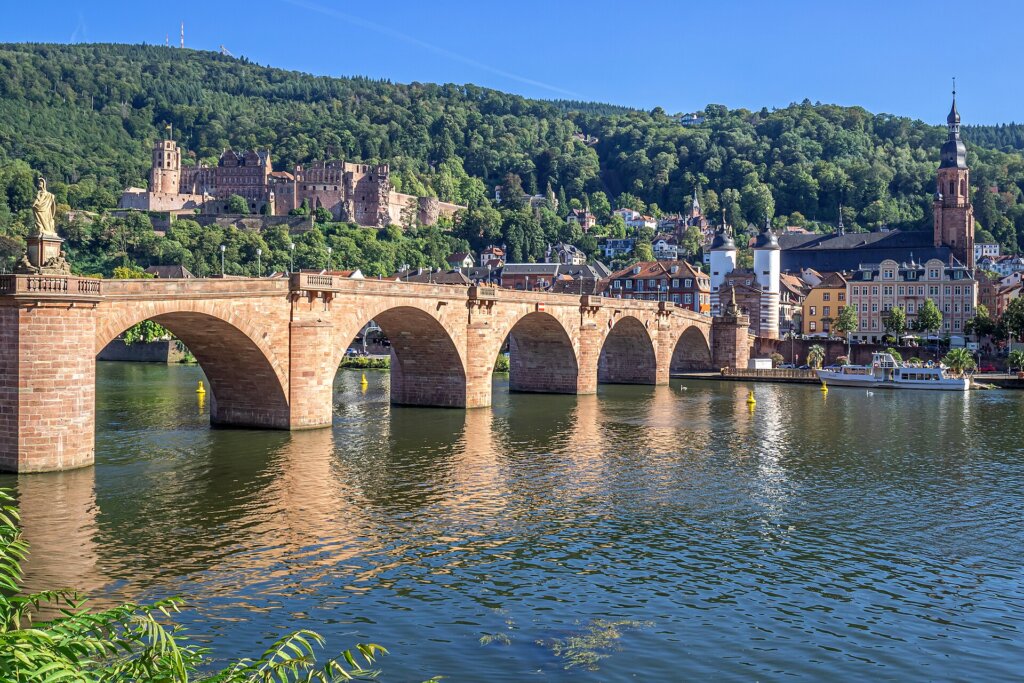
*Most public universities charge no tuition; some states, such as Baden-Württemberg, charge non-EU students tuition, and private universities charge fees. Visa details are from German missions in India as of October 2026 and may change. Hero photo: Heidelberg by Frans Berkelaar, via Wikimedia Commons, CC BY 2.0.